Can a Muscle Be Permanently Tight?
Short answer: usually not “permanent,” but it can feel that way
A muscle is rarely permanently tight in the true sense of being stuck forever. More often, what you’re feeling is a long-running pattern: your nervous system keeps the muscle “on,” nearby joints don’t move well, or your daily habits keep reloading the same area. Without a plan, that tightness can linger for months or years and seem permanent.
Why some tight muscles don’t respond to stretching
If you stretch the same spot every day and it still feels ropey, the issue may not be muscle length. Common drivers include protective tension after irritation, weakness in the opposing muscle group, limited joint mobility (like stiff ankles or hips), or repeated positions (desk posture, one-sided training, long driving). In these cases, stretching alone can provide temporary relief but not lasting change.
When “tight” is actually weakness or instability
Many muscles tighten up because they’re doing extra work to stabilize you. For example, hip flexors may feel tight when your glutes aren’t contributing, and neck/upper traps may grip when your mid-back isn’t supporting posture. Our team often recommends pairing gentle mobility work with strength work so your body stops defaulting to tension as a strategy.
How we help you get lasting relief
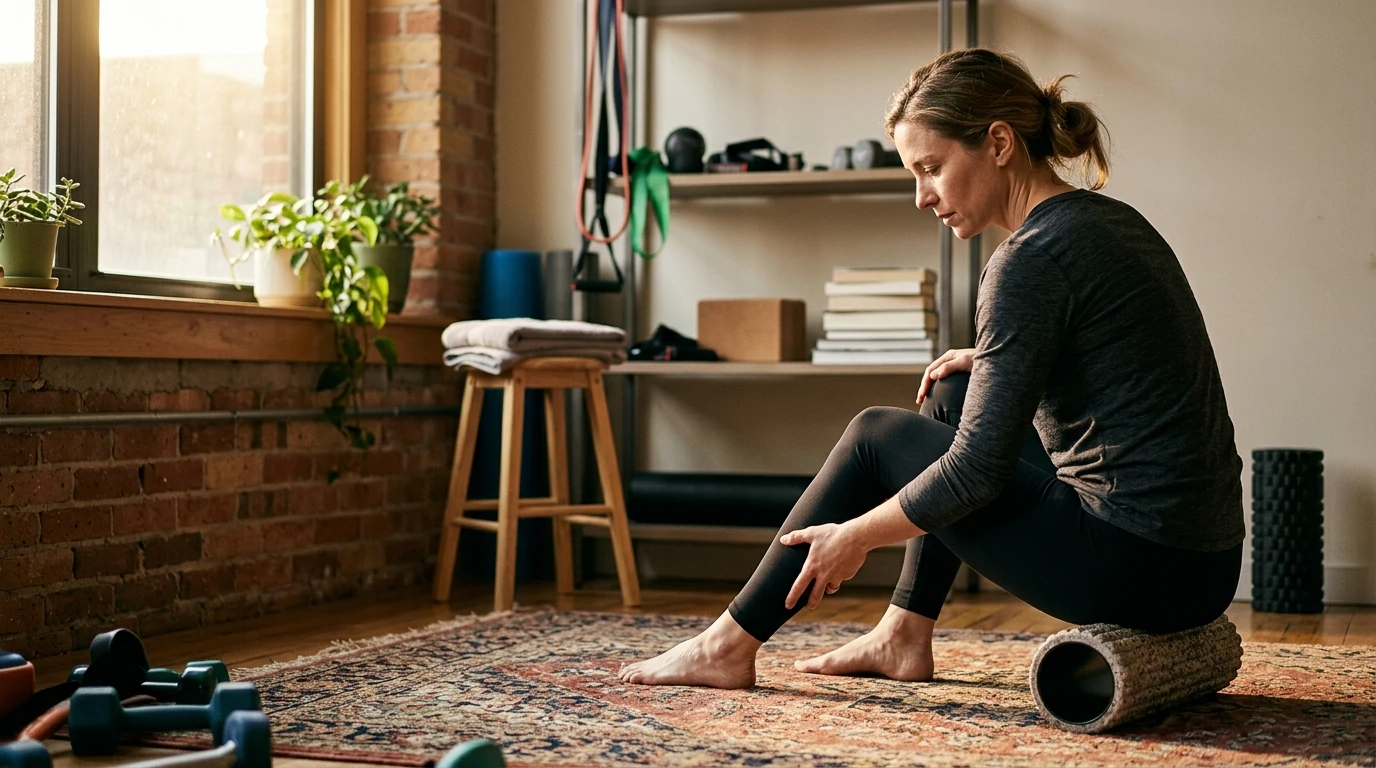
For most people, the best results come from a simple sequence: (1) calm the area, (2) restore motion, (3) build strength, and (4) repeat consistently. You can start with brief heat to relax tissues, then use a foam roller or massage ball for 60–90 seconds on tender points (avoid sharp pain). Follow with targeted stretches using a stretching strap to control intensity, then finish with a few slow strength reps (like bridges, rows, or calf raises) to “teach” the new range.
If you want a structured routine you can follow day by day, use our complete guide here: tight muscles relief daily mobility stretch recovery plan.
When to get evaluated
If tightness is paired with numbness, radiating pain, sudden weakness, swelling, or it’s worsening despite rest, stop pushing through and get assessed by a qualified clinician. Persistent cramping or night pain also deserves a closer look.
FAQ
Why do my muscles feel tight after sitting all day?
Long sitting keeps hips and ankles in a shortened position and reduces blood flow, so your body protects those areas with higher resting tension. Short movement breaks plus hip and calf mobility work typically help more than one long stretch session.
Recommended for you











Leave a comment