Tight Muscles, Real Relief: A Practical Daily Plan for Mobility, Stretching, and Recovery
Tight muscles rarely show up as one “bad spot.” They show up as stiff mornings, cranky hips after sitting, shoulders that creep up toward your ears, and workouts that feel harder than they should. Real relief comes from a simple, repeatable approach: improve mobility where joints need it, lengthen what’s actually short, and build a recovery routine that fits real life. Our team built this guide around practical steps—so relief isn’t a one-time stretch session, it’s something that sticks.
Why muscles feel tight (and why stretching alone often disappoints)
“Tight” is often a blend of multiple issues happening at once. Sometimes it’s true tissue stiffness. Sometimes it’s protective tension from stress, fatigue, or a cranky joint. Sometimes it’s reduced joint mobility that forces nearby muscles to brace for stability.
If a joint isn’t moving well—common culprits are hips, thoracic spine (upper back), and ankles—your body often compensates by tightening surrounding muscles. That guarding can feel like constant tightness, even if the muscle isn’t “short” in the classic stretching sense.
That’s why long, aggressive stretching can disappoint: you may get a temporary loosened feeling, but it fades as soon as you sit, scroll, commute, or train again. A better plan combines (1) mobility drills for joint motion, (2) targeted stretching for the tissues that actually need length, and (3) gentle strength/control so your body stops bracing.
The “Real Relief” framework: mobility + stretching + daily recovery
We use a simple order that tends to work for most people:
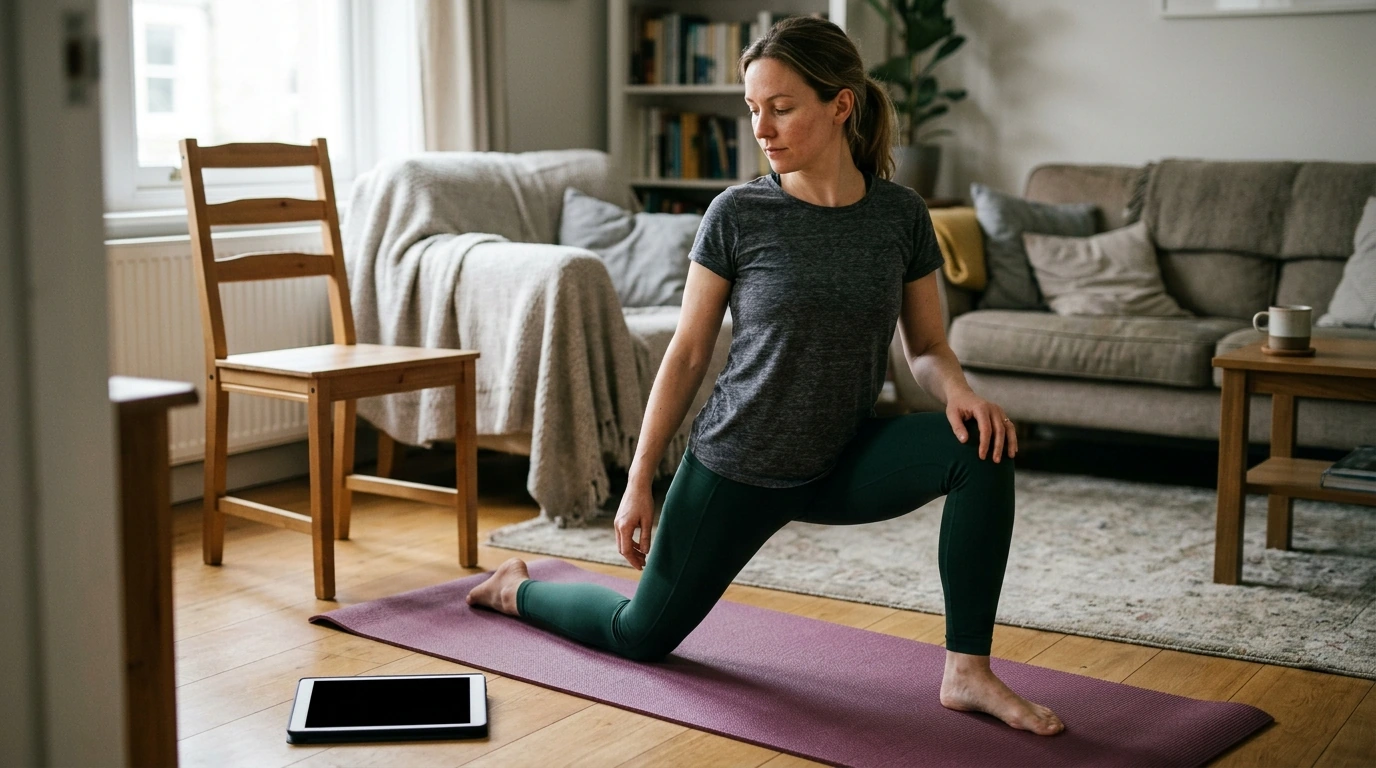
- Mobility first: open usable range of motion at the joint (especially hips, upper back, ankles).
- Stretch second: short, specific stretches for the areas that reliably feel restricted (hip flexors, glutes, calves, chest/pecs, lats).
- Downshift last: slow breathing, a brief walk, or gentle neck/shoulder release to reduce guarding and help the change “hold.”
Keep it short and frequent. Five to fifteen minutes most days beats one long session once a week. And use one non-negotiable rule: if a technique ramps pain, causes pins-and-needles, or produces sharp symptoms, scale it down or swap it.
A simple daily sequence that fits busy schedules
| Time available |
What to do |
Goal |
Example focus areas |
| 5 minutes |
1 mobility drill + 1 stretch + 30–60s breathing |
Reduce stiffness and restore baseline motion |
Hips + calves; thoracic spine + chest |
| 10 minutes |
2 mobility drills + 2 stretches + easy reset |
Improve range and reduce recurring tightness |
Hip flexors + glutes; shoulders + upper back |
| 15 minutes |
Mobility circuit + longer holds + light control work |
Make changes stick through better control |
Ankles + hamstrings; thoracic rotation + lats |
Target the most common tightness patterns (and what to do first)
Desk hips and low-back tension
If you sit a lot, start with hip mobility and gentle hip flexor/glute work before going hard on hamstring stretching. When hips aren’t contributing, your low back and hamstrings often “pick up the slack.” Restoring hip motion first usually makes everything else feel less glued down.
Rounded shoulders and a stiff upper back
Calf/ankle tightness
Neck and upper trap tightness
Make relief last: consistency, pacing, and “minimum effective dose”
For general stretch safety and form basics, resources like the NHS guide on stretching safely can help keep your sessions comfortable and consistent.
What’s inside “Tight Muscles, Real Relief” (and how to use it)
If you want a ready-to-follow structure, our team put it into Tight Muscles, Real Relief | Practical Ebook Guide for Tight Muscles Relief, Mobility, Stretching & Daily Recovery. You’ll use it like a daily plan: choose your time block (5/10/15 minutes), follow the sequence, and rotate focus areas based on what feels restricted that day.
When you’re ready to go deeper on the “mobility vs. flexibility” distinction—especially for lifting, running, and performance—we also recommend Mastering Mobility & Flexibility for Peak Performance – Athlete & Everyday Movement eBook | Mobility vs Flexibility Guide for Strength, Recovery & Injury Prevention.
When to level up: mobility vs flexibility for performance and injury prevention
For active routines, pairing mobility with recovery tends to reduce nagging tightness that shows up mid-week or late in a training block. The American College of Sports Medicine has also emphasized the value of a well-rounded approach to fitness (including flexibility work) in its position stands (see ACSM guidance).
Quick start: a 7-day reset that doesn’t overwhelm
Choose one “win” metric for the week: less morning stiffness, easier stairs, better hip rotation, or more comfortable posture. If cramping is part of what you’re calling “tightness,” it can also help to read the basics on common causes and when to get medical guidance (see NIH MedlinePlus on muscle cramps).
FAQ
How long does it take to feel real relief from tight muscles?
You can feel same-day improvement from a nervous-system downshift (easy breathing, gentle mobility), but longer-lasting change typically takes consistent work over about 2–6 weeks. Keep sessions short, do them most days, and track one simple functional result like morning stiffness or overhead reach.
Should mobility drills come before stretching or after?
Mobility usually works best first, because it improves joint motion and reduces guarding. Then stretch what still feels restricted, and finish with calm breathing or an easy walk so your body “keeps” the change.
Is it normal to feel sore after stretching and mobility work?
Mild, temporary soreness can happen, especially when you’re new or you increased volume. Sharp pain, pins-and-needles, or worsening symptoms aren’t normal—reduce intensity, shorten holds, and stay in a strong-but-safe range.
Recommended for you












Leave a comment