A reliable watering routine starts with the plant and its growing conditions—not a fixed day on the calendar. Soil type, pot size, light, temperature, and season all affect how quickly moisture disappears. We recommend checking the soil regularly and watering when the plant’s needs indicate it’s time.
What is the best watering schedule for plants?
Water when the soil has dried to the depth that suits the plant, rather than watering every plant on the same schedule. For many indoor plants, let the top inch or two of soil dry before watering. Plants that prefer consistently moist soil need more frequent checks, while succulents and cacti generally need the soil to dry more deeply between waterings.
When it’s time to water, moisten the soil thoroughly and let excess water drain. Empty saucers so roots aren’t left sitting in water. A pot with drainage holes helps prevent excess moisture from collecting around the roots.
How often should you water indoor plants?
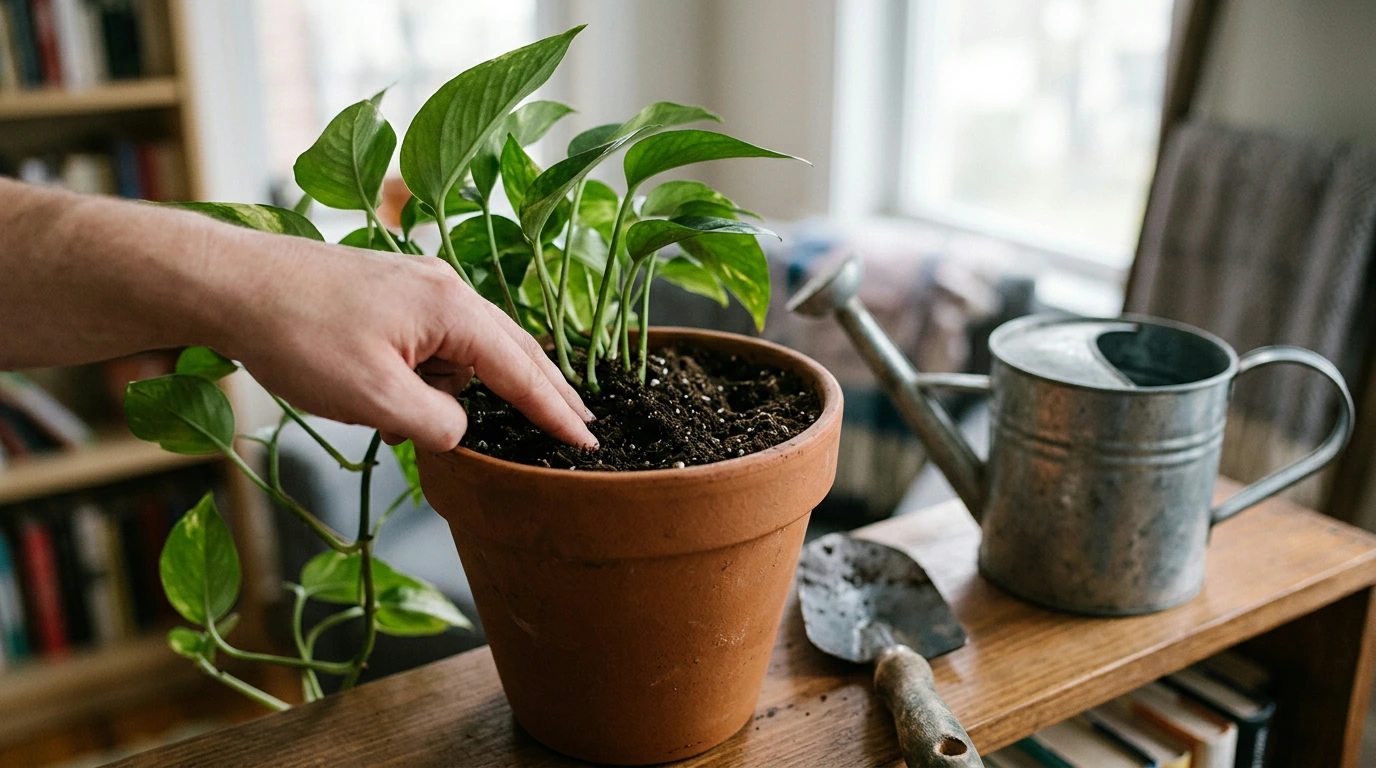
Check indoor plants about once a week, then adjust based on what you find. A plant in a warm, bright room or a small pot may dry quickly; one in a cool, dim spot or a larger pot may stay moist longer. Use your finger to check the soil instead of relying on the surface, which can dry before the root zone.
During active growth, some plants use water faster. In cooler or darker months, many need less. If the soil is still damp at your usual check, wait and test again in a few days.
How should you water outdoor plants?
Outdoor plants may need more frequent watering during hot, windy weather, especially in containers. Check containers and garden beds regularly, and water when the soil near the roots starts to dry. Newly planted plants often need closer attention while they establish roots.
Water at the base of the plant so moisture reaches the root zone. In garden beds, a slower, deeper watering is often more useful than a quick sprinkle that wets only the soil surface.
How can you adjust a watering routine?
Keep an eye on soil moisture and plant condition, then change your routine as the weather, light, or season changes. Wilting can signal dry soil, but it can also occur when roots are stressed by too much water. Check the soil before adding more.
For guidance by plant type, visit our plant watering schedule guide.
FAQ
Why do plant leaves turn yellow after watering?
Yellow leaves can result from soil that stays too wet, but underwatering, low light, and natural aging can also cause them. Check the soil before changing your routine, and make sure excess water can drain from the pot.
Recommended for you












Leave a comment