How do you improve your mobility and flexibility?
Build both with a combination of controlled movement, stretching, and strength training. Flexibility is how far a muscle can lengthen, while mobility is how well you can actively move a joint through its range. You need both to move comfortably through everyday activities.
Start with a manageable routine three or four days a week. Our guide to mobility versus flexibility explains how the two work together and why training both matters.
What should a routine include?
Start with gentle movement
Warm up for five to ten minutes with an easy walk, marching in place, or another comfortable activity. Then try controlled joint movements, such as shoulder circles, slow hip circles, and ankle rocks. Move smoothly without forcing a larger range.
Add strength through your available range
Exercises such as chair squats, step-ups, and glute bridges help you build control in positions you use every day. Begin with a range you can manage without pain, and gradually move farther as your strength and comfort improve. Try one or two sets of eight to twelve repetitions.
Finish with relaxed stretches
Choose stretches for areas that feel tight, such as your calves, hip flexors, chest, or the backs of your thighs. Hold each stretch for about 15 to 30 seconds while breathing normally. You should feel mild tension, not sharp pain; repeat once or twice on each side.
How can you make the habit easier to maintain?
Keep your first sessions short. Even ten minutes can help you establish a routine, and you can add time as the movements become familiar. On busy days, take a brief movement break between longer periods of sitting.
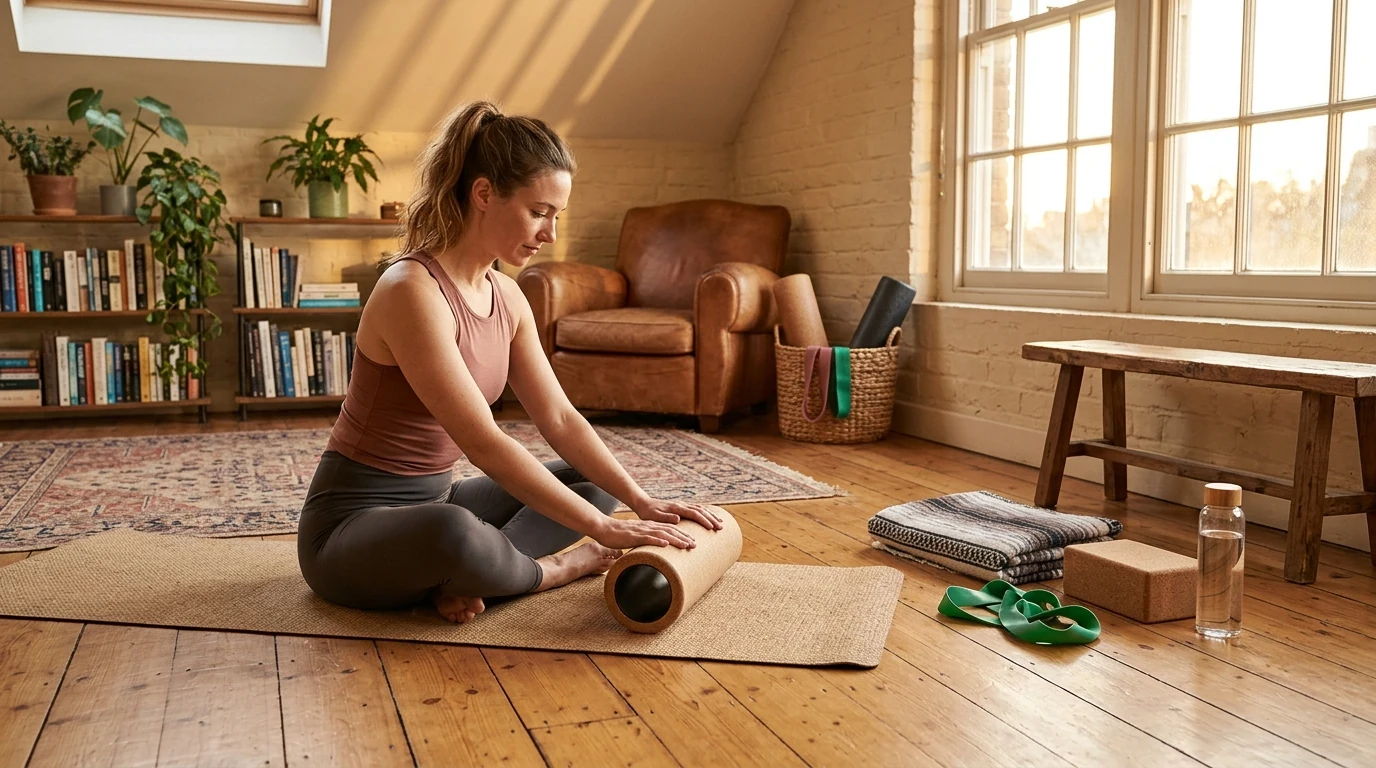
A supportive exercise mat can make floor exercises more comfortable, while a sturdy chair can provide balance during standing movements. If you use a resistance band, choose a light resistance that lets you stay in control, and check it for damage before each use.
Progress gradually rather than pushing for a deeper stretch every session. If a movement causes sharp pain, dizziness, or symptoms that persist afterward, stop. Our team recommends talking with a healthcare professional or physical therapist if you have an injury, a joint condition, or ongoing pain before starting a new routine.
FAQ
Should you stretch before or after exercise?
Before exercise, warm up with gentle movement and controlled dynamic stretches. Save longer, relaxed stretches for afterward, when your muscles are warm.
Recommended for you












Leave a comment