Dress to Impress: Nail Your Interview Look (and Walk In With Calm Confidence)
The right interview outfit does more than look polished—it removes a layer of decision fatigue so your focus stays on your answers, your presence, and your value. Our team put together a simple, repeatable way to choose an interview look that feels like you (not a costume), fits the role, and reads professional at first glance.
Start With the Role: What “Professional” Needs to Signal
Before you pick a blazer or shoes, decide what you need your outfit to communicate in that specific room (or on that specific screen). “Professional” changes depending on the work and the workplace.
- Match your outfit to the level of formality the role requires (corporate, business casual, creative, hands-on).
- Aim for “one notch more polished” than the everyday dress code of that workplace.
- Prioritize credibility signals: clean lines, structured pieces, tidy grooming, and intentional accessories.
- If you’re unsure, choose classic and minimal; it’s easier to add personality subtly than to dial back an overly bold look at the last minute.
If you want a quick baseline for expectations, reliable guidance from organizations like SHRM and practical interview prep from Harvard Business Review can help you sanity-check your choices without overthinking them.
The Outfit Formula: A Reliable 3-Part Framework
When nerves are high, a framework keeps you from spiraling into “nothing works.” Use this three-part structure to build an outfit that reads intentional.
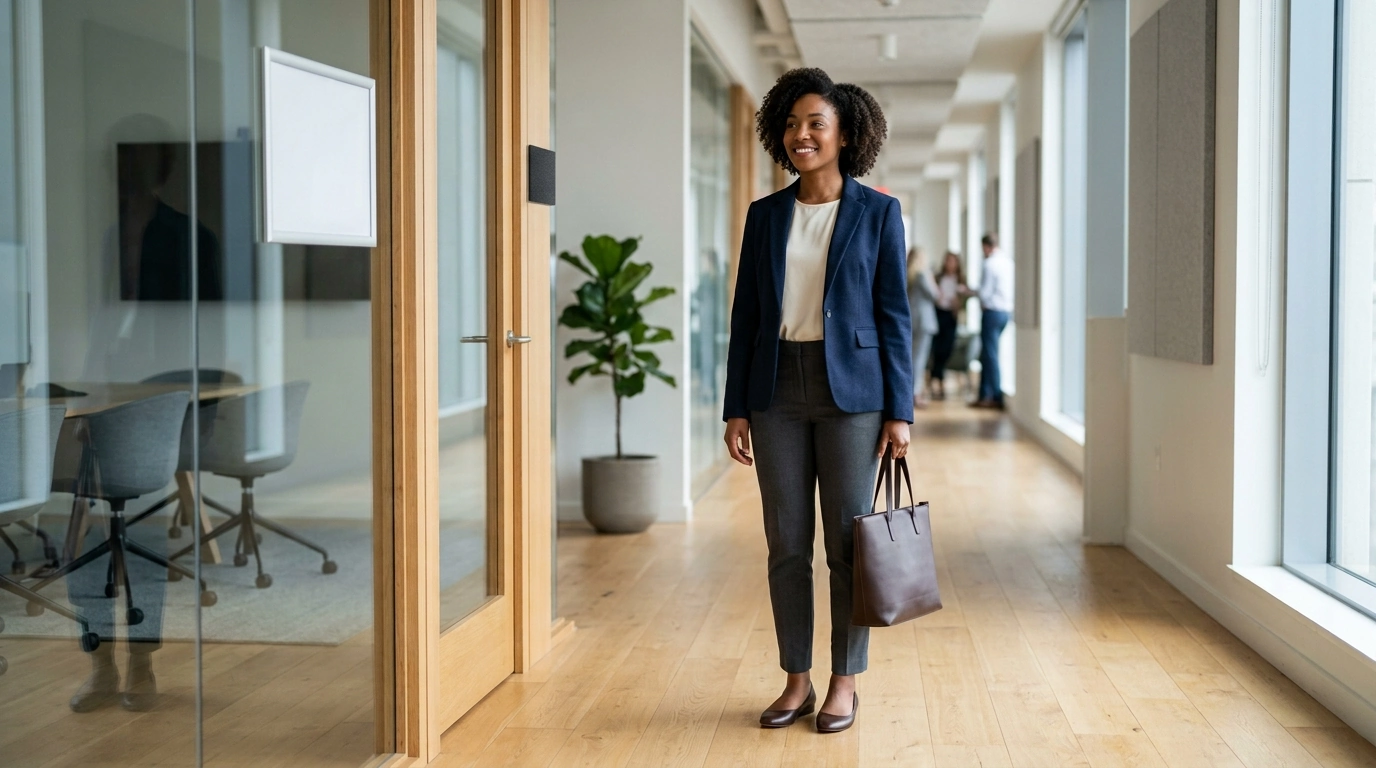
- Choose one structured anchor piece (blazer, tailored dress, crisp shirt, or polished knit) that defines the look.
- Add a balanced base (trousers/skirt at an appropriate length, or a dress with professional coverage and easy movement).
- Finish with a quiet “confidence layer”: shoes you can actually walk in, a simple bag, and streamlined accessories.
- Keep the silhouette intentional—avoid anything that needs constant adjusting (slipping straps, pulling hems, pinching waistbands).
Interview Outfit Builder: Pick Your Best Combination
| Interview setting |
Anchor piece |
Base piece |
Shoes & bag |
Notes that keep it safe |
| Corporate / finance / law |
Blazer or tailored sheath dress |
Matching trousers or knee-length skirt |
Closed-toe flats/heels + structured tote |
Neutral palette, minimal jewelry, avoid loud prints |
| Business casual office |
Polished cardigan or blazer |
Ankle-length trousers or midi skirt |
Loafers/flats + clean satchel |
One subtle color accent is plenty |
| Tech / startup |
Blazer, chore jacket, or elevated knit |
Dark straight-leg jeans (if appropriate) or trousers |
Sneakers only if clearly aligned to culture; otherwise loafers |
Prioritize neat fit and clean lines over trend pieces |
| Creative roles |
Statement blazer or modern dress silhouette |
Simple base in solid color |
Sleek ankle boots or flats + minimal bag |
Keep statement to one item so it reads intentional |
| Virtual interview |
Structured top (blazer, crisp blouse, knit blazer) |
Simple bottom (still professional—helps posture) |
Not visible on camera; keep nearby |
Avoid tiny stripes; choose solid colors and tidy neckline |
Color, Fabric, and Fit: The Details That Read as “Ready”
- Color: Neutrals (navy, charcoal, black, cream) are reliable; add one muted accent if it boosts your confidence.
- Fabric: Choose materials that hold shape and don’t wrinkle easily; avoid anything sheer under bright office or window light.
- Fit: Tailor where it counts—shoulders, waist, hem length. One small adjustment can make an outfit look instantly elevated.
- Comfort test: Sit, stand, walk, raise your arms, and carry your bag—nothing should tug, gap, or ride up.
For extra interview-readiness basics (including attire norms that vary by industry), the Indeed Career Guide is a helpful reference point.
Accessories, Grooming, and “Quiet Luxury” Signals
- Accessories should support your message, not compete with it—choose one focal point (watch, earrings, belt, or bag).
- Shoes: prioritize clean, closed-toe, and stable; confidence shows in how you move, not heel height.
- Grooming checklist: nails clean, hair intentional, scent minimal, clothes lint-free, and pockets/creases checked.
- Bring a simple “backup kit”: lint roller, blotting sheets, stain wipe, hair tie, and breath mints.
Common Outfit Mistakes That Create Distractions (and Easy Fixes)
- Overly trendy pieces that date the look quickly—swap for classic shapes and let one modern detail shine.
- Too-tight or too-loose fits that read uncomfortable—aim for clean lines with natural movement.
- Noisy jewelry or bags that clink, squeak, or require fussing—choose quiet hardware and simple closures.
- Untested shoes—wear them at home for a full hour first, including stairs and a brisk walk.
- For virtual interviews: busy patterns, harsh white tops, or low necklines—choose solid mid-tones and a tidy collar/neckline.
Confidence Prep: Make the Outfit the Easy Part
Tools We Made to Help You Get Ready (Without Overthinking)
FAQ
Is a blazer always required for an interview?
No—blazers help most in structured environments or first-round interviews where you want instant polish, but a sharp knit blazer, elevated sweater, or polished cardigan can work in business casual and some tech settings. When you’re unsure, use the “one notch more polished” rule and pick the option that holds its shape and looks intentional.
What should the interview outfit color palette be?
Neutrals like navy, charcoal, black, and cream are the most reliable because they photograph well and read professional quickly. If a color boost helps you feel confident, add one muted accent (a blouse, scarf, or nail color) and keep prints quiet—especially on camera.
How do I choose an outfit for a virtual interview?
Prioritize a structured top in a solid mid-tone with a tidy neckline so your face stays the focus, and avoid tiny stripes or tight patterns that can look distracting on screen. Even if they won’t be seen, wear professional bottoms—your posture and confidence tend to follow.
Recommended for you









Leave a comment