


Driver’s Seat Calm: Build Confidence & Emotional Independence
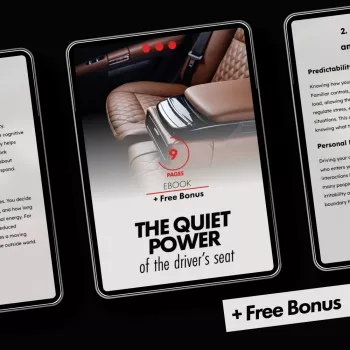
The Quiet Power of the Driver’s Seat: Emotional Independence, Confidence, and the Calm of Going Your Own Way
Driving your own car can be a surprisingly powerful form of self-trust: choosing your route, setting boundaries, and proving to yourself that you can handle what’s ahead. This ebook centers on the emotional side of mobility—how being in the driver’s seat can support independence, confidence, and steadier day-to-day calm.
Why the driver’s seat can feel emotionally different
Being the driver changes more than logistics. It changes the emotional “rules” of your day—especially when stress, uncertainty, or other people’s schedules tend to shape your choices.
- Autonomy in small choices (when to leave, where to go, which route to take) can soften the feeling of being dependent on someone else’s timeline.
- Direct control over movement often lowers anticipatory stress compared to waiting, coordinating, or asking for rides.
- A personal vehicle can act like a buffer zone between stressful environments and home, creating a transition space for emotional decompression.
- Everyday driving decisions build self-efficacy—confidence formed through doing. (The APA describes self-efficacy as belief in one’s ability to succeed in specific situations: American Psychological Association Dictionary of Psychology.)
Emotional independence: boundaries, agency, and self-reliance
Independence isn’t only financial or logistical; it’s also emotional—feeling capable of meeting needs without constant reassurance or negotiation. Driving can support that emotional independence in small, repeatable ways.
- Boundary-setting becomes simpler: leaving when you need to, declining plans without worrying about transportation, and protecting personal time.
- Agency grows when your plans are self-directed rather than dependent on someone else’s availability or mood.
- Self-reliance feels real when you can get yourself to work, appointments, errands, or supportive places without “owing” anyone a favor.
- Rebuilding after a life change (relocation, relationship changes, a long break from driving) often comes down to milestones—small, concrete proofs that capability is returning.
Confidence that builds quietly: skill, repetition, and self-trust
Driving confidence often shows up as calm competence. It’s the steadiness that comes from repetition—doing the thing, making small mistakes, and learning you can recover without spiraling.
- Competence becomes familiar: parking, merging, navigating unfamiliar areas, and handling minor surprises stop feeling like tests and start feeling like routine.
- Problem-solving improves: rerouting around traffic, managing timing, staying regulated when something goes slightly wrong.
- Small wins matter: short solo errands, practicing night driving, or navigating one new neighborhood can become evidence of growth.
- Self-trust strengthens when outcomes are linked to preparation and practice rather than luck or someone else’s decisions.
The emotional benefits of driving your own car
There’s a specific kind of calm that comes from familiarity: the same seat position, the same mirror angles, the same controls. That predictability can reduce cognitive load, especially during busy seasons of life.
- Safety through familiarity: consistent setup reduces mental effort, leaving more room for focus and regulation.
- A private space for emotional regulation: music, silence, breathing, and decompression between tasks—without needing to perform for anyone.
- Less social strain: fewer favors to request, fewer negotiations, and less lingering “indebted” feeling.
- Greater participation in life: easier access to work, learning, healthcare, community, and the relationships that keep you grounded.
| Driving moment | Practical outcome | Potential emotional benefit |
|---|---|---|
| Leaving when you choose | More control over time | Relief, boundaries, self-respect |
| Taking a new route | Expanded familiarity and options | Confidence, curiosity, flexibility |
| Running a solo errand | Independent task completion | Self-trust, pride, steadiness |
| Driving home after a stressful day | Transition buffer | Decompression, emotional reset |
| Handling a small mistake safely | Problem solved without panic | Resilience, calm competence |
Recommended reads to support calm, capable mobility
If emotional steadiness is the goal, the right resource can help you practice without forcing confidence or pretending fear isn’t real.
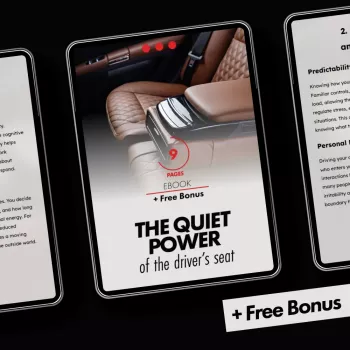
- The Quiet Power of the Driver’s Seat – Ebook on Emotional Independence, Confidence, and the Emotional Benefits of Driving Your Own Car ($14.99): A mindset-focused guide to autonomy, boundaries, and the calm competence that comes from being in control of your own mobility.
- How to Feel Safe Traveling Without Knowing Every Turn – A Step-by-Step Guide to Confident, Stress-Free Travel ($5.99): Helpful for anyone who gets tense about unfamiliar routes and wants a more grounded way to navigate without needing perfect certainty.
- Morning Routine Checklist for a Positive Mindset | Daily Morning Routine for Positive Mindset, Printable Digital Checklist for Focus, Gratitude & Productivity ($3.99): A simple structure to support steadier mornings—useful when driving anxiety is tied to rushed starts or scattered attention.
Who this ebook is for
- Adults who want more emotional independence and a stronger sense of agency in daily life.
- New or returning drivers rebuilding comfort after a long break, relocation, or life transition.
- People who feel anxious about relying on others for rides and want practical emotional tools to feel steadier.
- Anyone who wants a mindset-focused companion to the personal growth that can come with driving.
How to get the most from the ideas (without forcing confidence)
Confidence tends to stick when it’s built at a nervous-system-friendly pace. Gradual exposure, routine, and recovery time often matter more than hype.
If stress or worry feels persistent and interferes with daily functioning, it may help to learn more about anxiety and supportive options through an authoritative health source like the National Institute of Mental Health.
FAQ
What is the book Quiet Power about?
It focuses on emotional independence and confidence through the lens of driving—how autonomy, routine, and control over mobility can support self-trust, boundaries, and calmer day-to-day decision-making.














Leave a comment