A long day outdoors can leave your skin feeling warm, tight, or tender. Our approach to after-sun care is to keep it simple: step out of the sun, cool down gently, moisturize, and pay attention to how you feel. These steps may make you more comfortable, but they cannot undo UV exposure. If symptoms are significant, skincare is not a substitute for medical advice.
Start by getting cool and comfortable
If your skin feels overheated, move indoors or find shade. Staying in the sun can add to the discomfort, even if something you have applied feels soothing. Give yourself time to cool down before deciding what your skin needs next.
Take a cool—not icy—shower or bath, or hold a cool, damp cloth against uncomfortable areas. Skip rough washcloths and pat your skin dry instead of rubbing it. Drink water after time in the heat, especially if you have been sweating. The goal here is comfort, not a complicated treatment routine.
Moisturize while skin is slightly damp
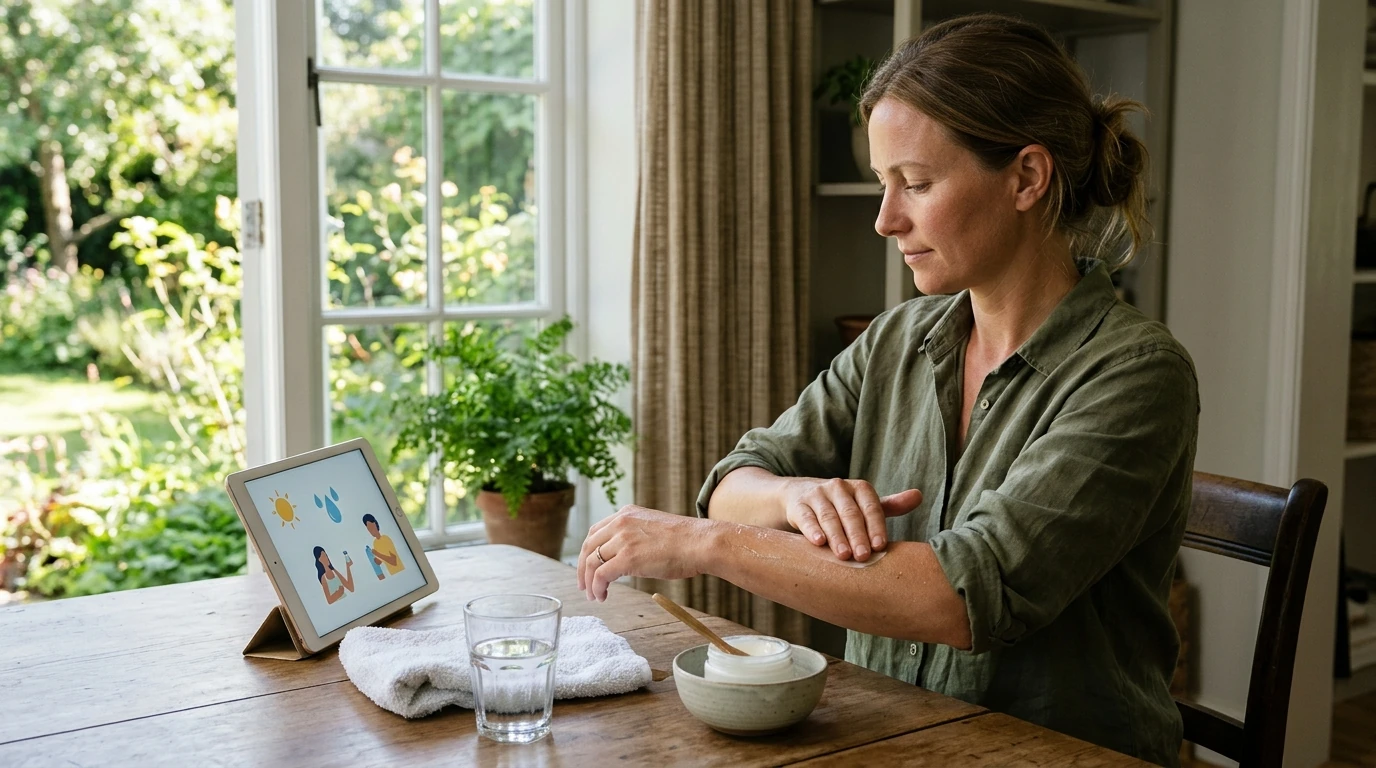
After bathing, apply a gentle moisturizer while your skin is still a little damp. Use a light touch. If a product stings or makes your skin feel worse, stop using it and choose a simpler option. You do not need to layer several products to make an after-sun routine worthwhile.
Set aside scrubs, exfoliating acids, and other products that add friction or irritation while your skin feels tender. Loose clothing can also be more comfortable than fabric that presses or rubs against sensitive areas. Let your skin settle before returning to your usual routine, and do not peel flaking skin or pop blisters.
A simple after-sun decision guide
| What you notice |
A sensible next step |
What to avoid |
| Skin feels warm or tight |
Get out of the sun, cool the area gently, and moisturize. |
Hot showers and harsh scrubbing |
| Skin looks red and feels sore |
Continue gentle care and monitor how you feel. |
Further sun exposure and irritating products |
| Blisters or significant symptoms appear |
Protect the area and seek medical advice, especially if symptoms are widespread or accompanied by illness. |
Popping blisters or treating the problem as routine dryness |
Know when home care is not enough
Sunburn can become more noticeable hours after you come inside. Rather than judging only by how your skin looks at first, check in with how it—and the rest of your body—feels over time. Worsening pain, severe blistering, fever, chills, dizziness, or nausea call for medical guidance, not another cosmetic product.
Keep blisters intact. If you are unsure how to care for a burn, ask a healthcare professional. The American Academy of Dermatology Association’s sunburn guidance is also a useful reference for basic care and signs that warrant attention.
Make the next sunny day easier on your skin
After-sun care is a comfort routine, not a replacement for prevention. Before you head outdoors again, plan for shade and protective clothing, and use broad-spectrum sunscreen according to its label. Reapply as directed, particularly after swimming or sweating. The CDC’s sun safety guidance offers more ways to reduce UV exposure.
A tan may look “sun-kissed,” but color from the sun is still a sign of UV exposure—not proof that your skin no longer needs protection. Keep a short note of what helped you feel comfortable and what caused irritation. Next time, you can repeat the useful steps without buying or applying things you do not need.
Keep a practical routine in one place
If scattered reminders are hard to follow, our Sun-Kissed, Not Sun-Stressed: After-Sun Skincare Guide eBook is an option for building a more intentional after-sun routine. It is a resource for organizing your approach, not a treatment that reverses sun damage or replaces medical care.
Prefer to plan habits before your day begins? Our Morning Routine Checklist for a Positive Mindset is a separate planning tool, not an after-sun guide. You could use a morning reminder to gather sunscreen and protective clothing; once you are back inside, keep your skincare decisions grounded in how your skin feels.
Our team would start with the basics every time: cool your skin gently, moisturize if it feels comfortable, avoid more sun while it is sensitive, and take concerning symptoms seriously. More products do not necessarily mean better care.
Before choosing, compare the product details with your daily routine, available space, care needs, and preferred setup. The strongest option is usually the one that fits the intended use clearly and remains simple to clean, store, and check before repeat use.
It is also worth checking measurements, material notes, included parts, and compatibility details so the item matches the way it will be used after delivery.
FAQ
What is the opposite of sun kissed?
There is no fixed opposite. In a skincare context, “sun-stressed” can describe skin that feels uncomfortable after too much sun, but it is not a medical diagnosis.
What does the term “sun kissed” mean?
“Sun kissed” commonly describes a warm, lightly sun-touched appearance. Visible color from the sun still reflects UV exposure, so protection still matters.
Which is correct, sunkissed or sun kissed?
“Sun-kissed” is a common spelling, especially before a noun. “Sun kissed” also appears in informal writing.
Recommended for you










Leave a comment