A useful test drive is more than a quick spin around the block. It is your chance to find out whether a car fits your body, your daily routine, and the roads you actually use. A little preparation can also make it easier to compare vehicles without relying on first impressions alone.
Our team recommends approaching each drive with a few priorities in mind. Use the checks below, along with our Take the Perfect Test Drive digital guide, to make a more confident decision.
Get Ready Before You Drive
Start with a realistic budget that accounts for more than the advertised price. Consider financing costs, insurance, taxes, registration, fuel or charging, and likely maintenance. Knowing your comfortable total cost can help you focus on vehicles that make sense after the excitement of the drive wears off.
Next, list the needs that matter most. You might prioritize room for passengers, a manageable size for city parking, or a comfortable ride on a longer commute. Separate essentials from features that would simply be nice to have so you have a clear way to compare your options.
Bring a valid driver’s license and confirm the seller’s test-drive requirements in advance. Ask about the permitted route and whether someone will accompany you. If possible, plan a drive that includes local streets, turns, parking, and a faster road where permitted. A route that resembles your routine will tell you more than a few easy blocks.
Check Comfort and Visibility First
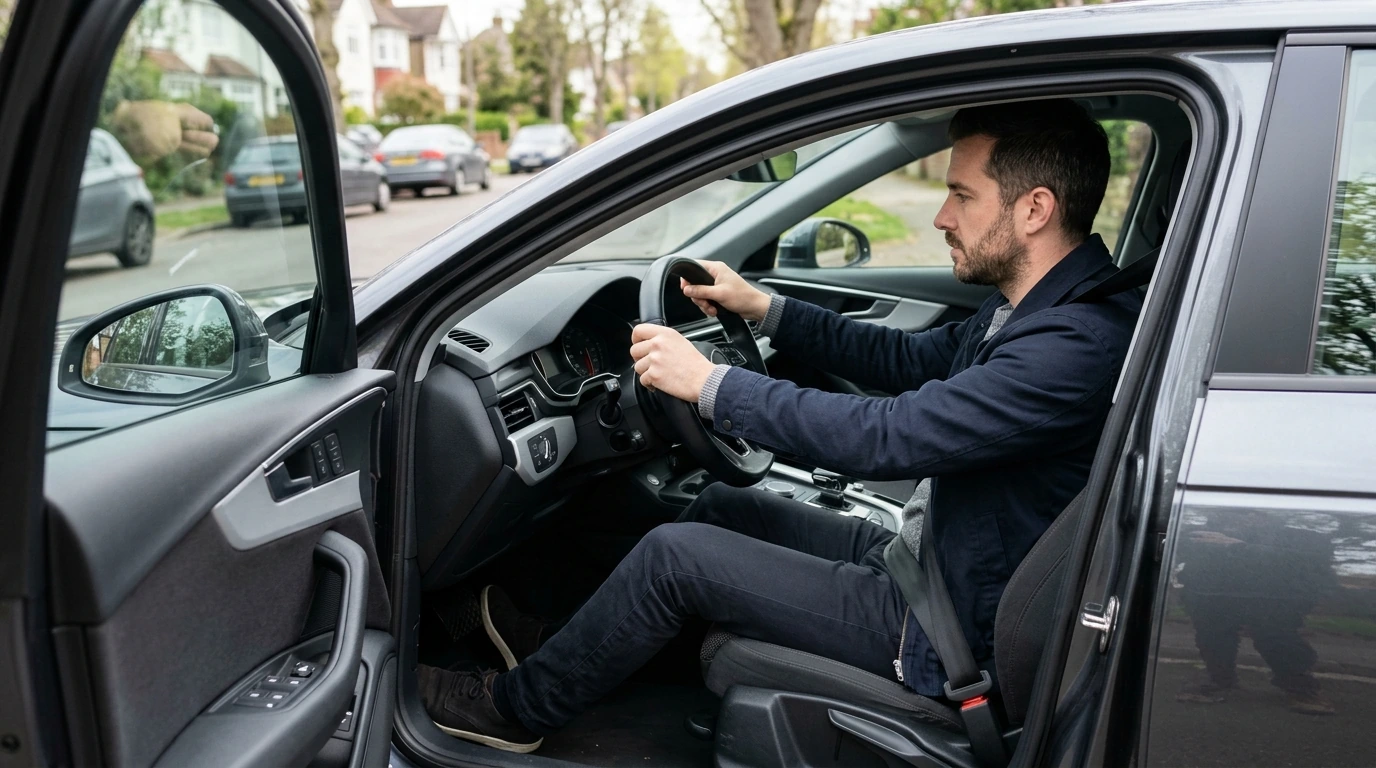
Before starting the engine, adjust the seat, steering wheel, and mirrors. You should be able to reach the pedals comfortably and use the steering wheel and primary controls without stretching. Take a moment to see whether the driving position feels natural, not just acceptable for a short trip.
Look in every direction and note any blind spots created by pillars, headrests, or the vehicle’s shape. Check how easily you can see the instrument display and reach frequently used controls. Get in and out a couple of times, too: a seat height or door opening that feels awkward now may become frustrating in daily use.
Consider the people and items you regularly carry. If you often travel with passengers, check the rear seating area and access to it. Look at the cargo space with your usual groceries, sports equipment, or other belongings in mind.
Notice How the Car Responds
Drive at a comfortable pace and give yourself time to notice the car’s behavior. Does it accelerate smoothly when you need to merge? Do the brakes respond predictably? Pay attention to steering effort, ride comfort, and whether the vehicle feels stable on the road surfaces along your route.
Listen for unexpected rattles, squeaks, or other noises. Some road and wind noise is normal, but a sound that concerns you is worth noting and asking about. If something feels unusual, avoid making assumptions about the cause; have a qualified professional investigate before you commit.
Try a parking maneuver and reverse if the seller permits it. Cameras and sensors can be helpful, but use mirrors and look around rather than relying on assistance features alone. The following checks can help you keep your observations consistent across vehicles.
Test Drive Checks
| Situation |
What to notice |
Question to ask yourself |
| Starting and stopping |
Smoothness and pedal feel |
Can I control the car comfortably? |
| Turns and lane changes |
Steering response and visibility |
Does the car feel predictable? |
| Parking |
Maneuverability and rear visibility |
Can I park it with confidence? |
| Faster roads |
Noise and stability |
Would I be comfortable on my usual trips? |
For another perspective on safety, review available NHTSA vehicle safety ratings. Ratings can supplement your observations, but they do not replace a careful evaluation of the specific vehicle.
Compare Your Notes Before Deciding
Write down your impressions soon after each drive, while details are fresh. Record what worked, what bothered you, and any questions you want answered. Compare each vehicle against the same priorities rather than judging one by its features and another only by its price.
For a used car, consider obtaining a vehicle history report and arranging an independent pre-purchase inspection. A test drive can reveal how a car feels, but it cannot uncover every mechanical or historical issue. The FTC’s used-car buying guidance offers more information about reports, inspections, and purchase paperwork.
Before committing, review the total cost and ask about anything that remains unclear. It is reasonable to take time to compare your notes, understand the terms, and decide whether the vehicle meets your needs and budget.
Bring a Guide to Your Next Test Drive
Our Take the Perfect Test Drive digital guide is designed for shoppers who want to approach the drive more deliberately. At $10.99 USD, it is a resource to use alongside your own priorities, questions, and independent vehicle checks.
If unfamiliar routes also make you uneasy, explore our confident travel guide for a separate resource on navigating travel with more confidence. It does not replace vehicle safety checks or preparation for your test drive.
FAQ
What is take a test?
To take a test means to try or assess something. In car shopping, taking a test drive means driving a vehicle to see how it feels and whether it suits your needs.
What does it mean to take a test drive?
A test drive is an opportunity to try a vehicle on the road and assess its comfort, handling, visibility, and fit for your needs.
How long should a test drive be?
Allow enough time to try road conditions that represent your usual driving and to practice parking, subject to the seller’s rules. There is no mandatory fixed duration.
Is a test drive enough to check a used car?
No. A test drive helps you assess the driving experience, but a vehicle history report and an independent pre-purchase inspection can help uncover additional concerns.
Recommended for you











Leave a comment