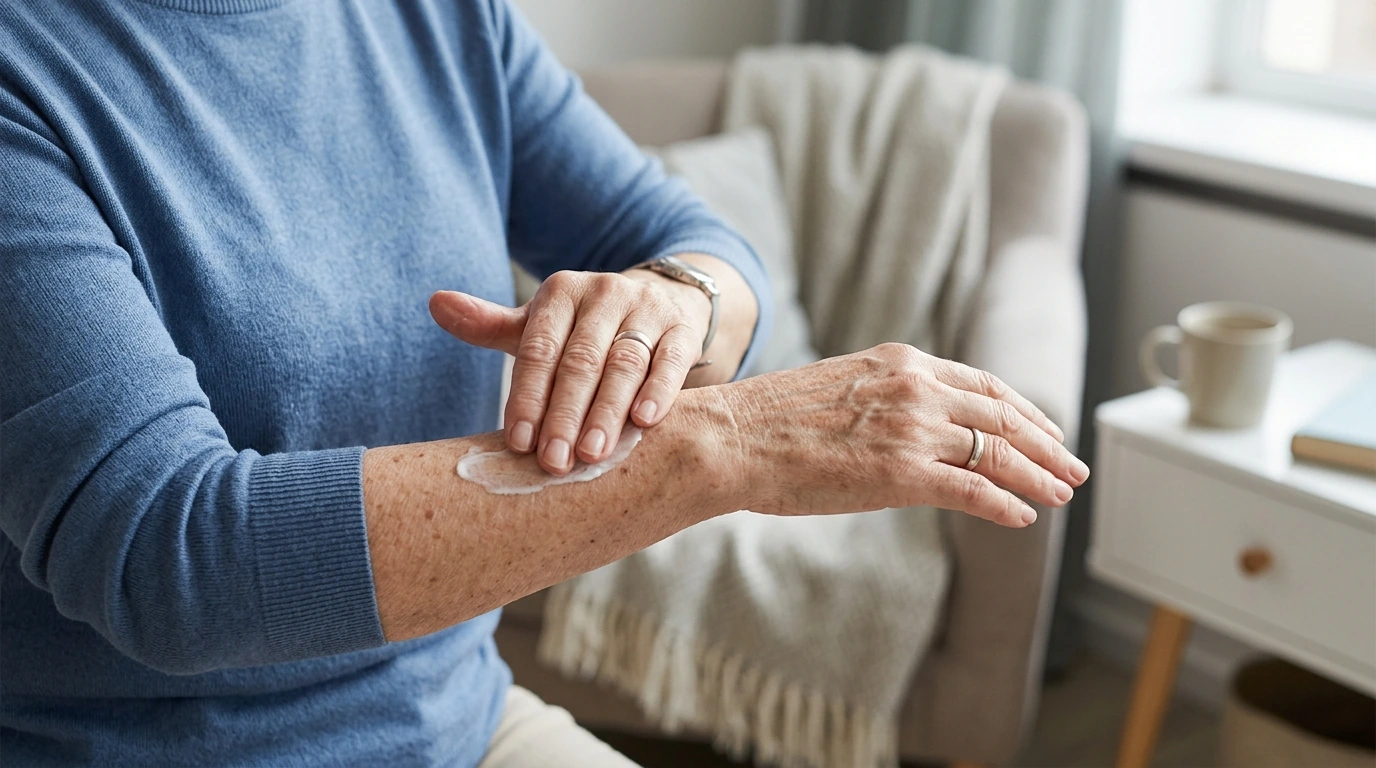
Q: What are 10 common skin conditions in the elderly?
Aging skin tends to get thinner, drier, and more reactive, so everyday friction, weather, and slower healing can show up as new concerns. Our team sees the best results when you pair gentle daily care with targeted products and early check-ins with a clinician for anything changing, bleeding, or not healing. For a decade-by-decade approach to supportive routines, see our guide: skin changes by age timeline.
A: 10 common conditions and what you can do
1) Xerosis (dry skin): Tight, rough, flaky skin is extremely common. Use a fragrance-free cream (not just a lotion) right after bathing and switch to lukewarm showers with a mild cleanser.
2) Pruritus (itch): Often linked to dryness or irritants. Add a richer moisturizer, avoid hot water, and choose dye-free detergents; for persistent itch, ask about itch-relief topicals.
3) Eczema/dermatitis: Patches that sting, burn, or scale can flare with soaps, wool, and low humidity. Keep routines simple, moisturize twice daily, and use barrier creams on easily irritated areas.
4) Senile purpura (easy bruising): Purple blotches on forearms/hands from fragile vessels. Protect with long sleeves, minimize bumps, and use daily moisturizers to reduce skin fragility.
5) Skin tears: Minor trauma can cause painful splits. Prevent with regular moisturizing, protective clothing, and non-adherent dressings if a tear occurs.
6) Pressure injuries (bedsores): Risk rises with limited mobility. Reposition regularly, use pressure-relieving cushions, and keep skin clean and dry with gentle barrier ointments.
7) Venous stasis dermatitis: Itchy, discolored lower legs with swelling. Support circulation with clinician-approved compression, elevate legs, and moisturize to reduce scaling.
8) Intertrigo: Rash in skin folds from moisture and friction. Keep folds dry, use breathable fabrics, and apply a zinc-based barrier where rubbing occurs.
9) Actinic keratoses: Rough, sandpapery spots from sun damage. Use daily broad-spectrum sunscreen and schedule evaluation for new or changing lesions.
10) Skin cancers (basal cell, squamous cell, melanoma): Look for sores that don’t heal or spots that change. Daily sun protection and prompt dermatology visits are key.
FAQ
How can older adults prevent skin tears at home?
Moisturize daily to reduce fragility, keep nails trimmed, and pad sharp furniture edges in high-traffic areas. Choose long sleeves or protective wraps for forearms if bumps are common.
Recommended for you












Leave a comment